OCTOBER 21, 2026
The Indie Artist Toolbox: What to Build With Before You Spend on Anything Else
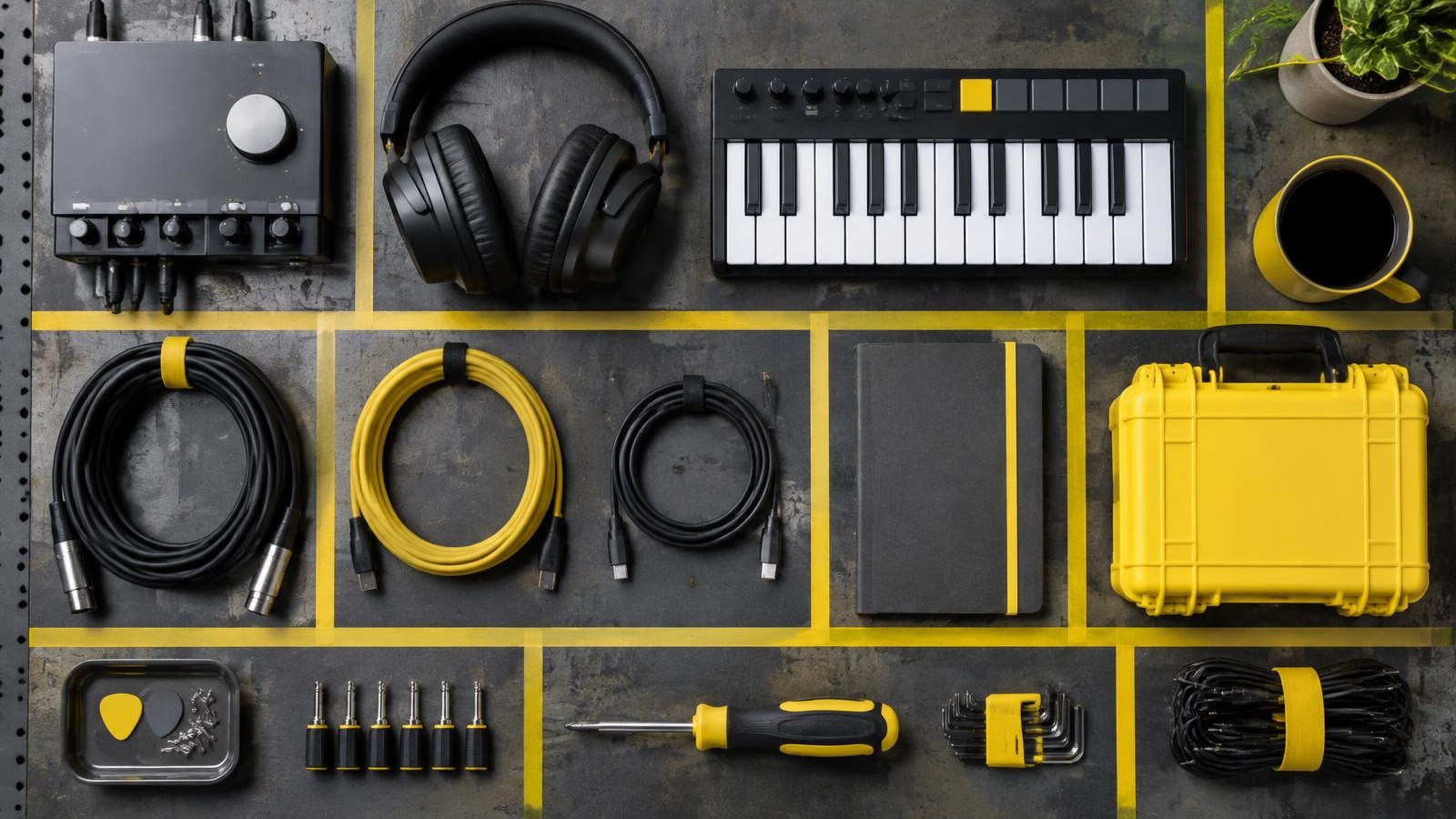
Artists love asking what to buy next — new gear, new ads, new everything. Wrong question. Before you spend on anything else, there are tools to *build* — most of them free — that turn your music from a hobby you post into a business you run. Here they are, in the order I'd build them.
🧰 Tool Zero: Records You Actually Own the Rights To
Everything else in this toolbox exists to sell, pitch, and organize your records — so the records have to be business-ready first. That means songs built on beats you licensed properly, with the paperwork to prove it. An unlicensed record can't be pitched, placed, entered in a contest, or safely promoted. Build the toolbox on a foundation you own.
📋 Tool 1: One List of Everything You Have
One simple spreadsheet or notebook page: every song, what stage it's in (finished, needs a verse, unreleased), and which beat license sits under it. Artists lose money in the gaps of their own catalog — the finished record they forgot, the exclusive they let sit. You can't sell what you can't see. An hour to build, five minutes a week to keep honest.
📬 Tool 2: An Email List You Own
Followers are rented. An email list is owned. If every platform you post on disappeared tomorrow, your list is the audience that comes with you. Start free, start small — your first 100 fans are already in your phone — and send something worth opening: early records, real stories, first shots at every drop. This is the single highest-value tool on the list, and it costs nothing but consistency.
🔗 Tool 3: One Doorway
One page — your site or one clean link page — where a stranger can do three things in under a minute: hear your best record, buy something, and join your list. Not ten links competing with each other. One door, kept current. Every post, every video, every conversation points at it.
🗂️ Tool 4: A One-Page Press Kit
Your bio in three honest sentences, your best photo, your links, and your receipts — radio, press, shows, deals, real numbers, whatever stage you're at. Promoters, contest judges, grant reviewers, and sponsors all make the same fast decision. The artist whose kit is ready looks like a business. The artist who has to "get back to you" looks like a risk.
🗓️ Tool 5: A Calendar and a Money Sheet
A release calendar you can see — what drops, when, and what it ties to — and one page tracking what each release cost and what it earned back. That second page is where artists become businesspeople: you stop guessing which moves work and start reading it. Beats, features, visuals, promotion — when the numbers are in front of you, the next dollar spends itself smarter.
Final Takeaway: Gear doesn't build careers; systems do. Records you own, one list of your catalog, an email list, one doorway, a press kit, a calendar, and a money sheet — build those seven things before you spend on anything else, and every dollar you spend after will have somewhere real to land.
The 1,000-Fan Blueprint — free. You don't need a label to pick you: 1,000 true fans × $200 a year = $200,000. Get the math and the complete system.
— BÜBU · If I can't do it, you don't need it · @bubutheproducer · bububeats.com
🎧 *Need this sound? This week's beats are live in the store → bububeats.com*